Contents
- Planning for Future Expansion and Increased Production
- Designing for Regulatory Compliance from the Beginning
- HVAC, Air Quality, Humidity, Odor, and Environmental Controls
- Workflow and Space Planning
- Designing for Maintainability and Facility Management
- Energy Efficiency and Long-Term Operating Costs
- Security, Access Control, and Protection of High-Value Assets
- Summary
- Frequently Asked Questions
When developing a cannabis cultivation, processing, manufacturing, and/or vertically integrated facility, hundreds of decisions will shape the project. While every decision has value, a handful carries far greater long-term consequences than most operators realize. Throughout my career, working in cannabis and other highly technical industries has illustrated one lesson time and time again, that the most expensive facility problems rarely begin during construction. They begin months, sometimes years earlier when critical planning decisions are overlooked, delayed, or made without fully understanding their long-term operational impacts. By the time those issues surface in the field, or in operations, they often result in redesign, construction changes, operational inefficiencies, regulatory challenges, production limitations, or costly renovations. These problems rarely result from poor construction. More often, they are the downstream consequence of decisions that were never fully evaluated during planning.
These issues typically surface based on a lack of proper planning. In many cases, the business plan has not been fully developed, the pro forma remains incomplete, or the project schedule has become so compressed that developing a comprehensive Basis of Design no longer appears feasible. The reality, however, is that without proper planning the pathway to a successful project becomes significantly more difficult, time-consuming, and costly.
Avoiding unnecessary chaos isn’t complicated. It simply requires taking the time to evaluate those aspects of a facility that will ultimately determine its long-term operational and financial success. In my experience, the following seven decisions consistently have the greatest influence on whether a facility achieves its operational objectives or spends years overcoming avoidable limitations.
- Planning for future expansion and increased production
- Designing for regulatory compliance from the beginning
- HVAC, air quality, humidity, odor, and environmental controls
- Workflow and space planning for cultivation, processing, and manufacturing
- Designing for Maintainability and Facility Management
- Energy efficiency and long-term operating costs
- Security, access control, and protection of high-value assets
When, how, and if these topics are discussed and vetted, typically through a Consequence Analysis, often determines whether the facility reaches its production goals, operating budget, regulatory objectives, and long-term profitability. The Consequence Analysis looks at the advantages and consequences of each decision, both on its own and on the facility as a whole.
In a perfect world, the above components are all part of the initial planning process. The operator’s Business Plan should identify each of these items as key aspects of the facility’s design while defining criteria for use by the design team in their evaluations. Too often, owners and design teams become focused on room layouts, equipment locations, and architectural drawings before first defining the operational criteria those drawings are intended to support. Drawings document decisions, they should never replace them.
The most successful projects begin with a comprehensive Basis of Design (BOD). Rather than serving as another design document, the BOD establishes the operational framework for the project by identifying the owner's goals, production requirements, regulatory objectives, operational philosophy, budget, schedule, and long-term vision. It provides the design team with the criteria necessary to evaluate alternatives and ensures that critical decisions are made deliberately rather than reactively.
Another reality I've observed is that while changes made during design are generally less expensive than changes made during construction, they are rarely free. Every design revision affects consultant coordination, project schedules, and professional fees. More importantly, decisions that are not fully evaluated during design often reappear during construction, where their downstream impacts become significantly more expensive to resolve. For that reason, the objective of early planning should never be to produce drawings as quickly as possible. Instead, it should be to make informed decisions that reduce risk, improve operational performance, and create a facility capable of supporting the owner's long-term business strategy.
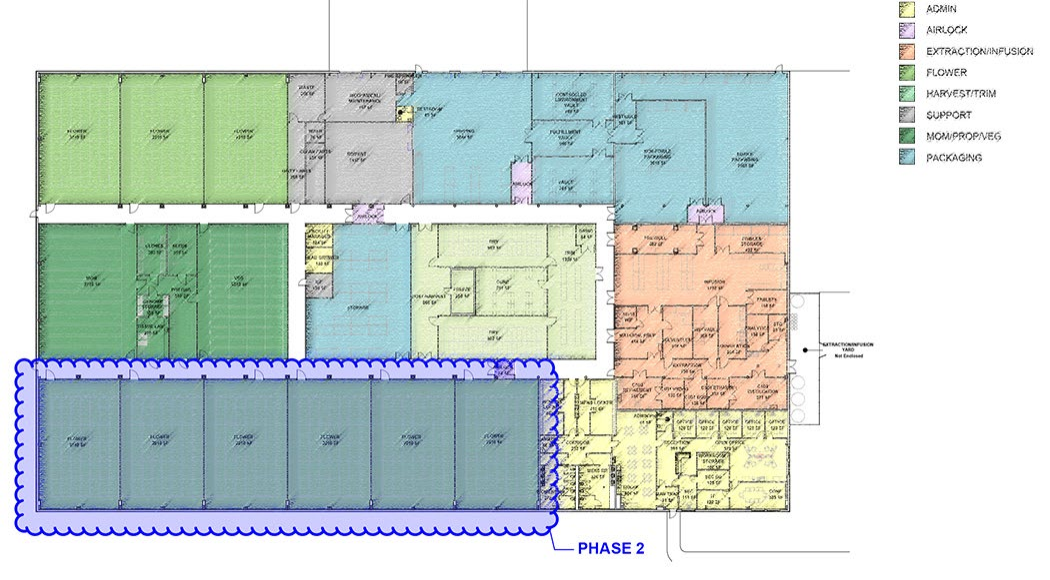
Planning for Future Expansion and Increased Production
One characteristic is common to nearly every successful cannabis operation: growth.
Whether driven by increased demand, additional product lines, expanded licensing opportunities, or improved cultivation performance, facilities that operate successfully rarely remain unchanged throughout their lifecycle. The question isn’t whether the facility will evolve. Rather, the question becomes whether the facility was designed to support that evolution.
Growth extends far beyond the obvious constructing of additional flowering rooms. It may include increased yield production, expanded processing and manufacturing operations, new product development, additional packaging capabilities, or enhanced distribution. Each of these changes places new demands on the facility's infrastructure, production flow, staffing, utilities, and support spaces. When future growth is not considered during the initial planning process, expansion often becomes significantly more complicated and expensive. Existing operations may need to be disrupted, production schedules affected, utilities upgraded, or recently completed work demolished simply to accommodate changes that could have been anticipated years earlier.
Examples include:
Expansion of an Operating Facility
- Maintaining continuous production during construction
- Protecting cultivation environments from dust, debris, and contamination
- Preserving employee and material circulation
- Integrating new construction with existing infrastructure
Increased Production
- Evaluating drying, curing, trimming, packaging, vault, and storage capacities
- Identifying downstream bottlenecks created by higher yields
- Assessing labor requirements and workflow impacts
Increased Product Development
- Additional raw material storage
- Expanded processing and manufacturing areas
- Additional packaging operations
- Finished goods storage and vault capacity
Before establishing the facility's design, owners should carefully evaluate several fundamental questions:
- How will future growth impact existing operations?
- Can production increase without creating downstream bottlenecks?
- Is it more economical to strategically oversize selected spaces and infrastructure today than renovate them later?
- What are the long-term financial implications of each approach?
- Capital expenditures (CapEx)
- Operating expenses (OpEx)
- Revenue generation and return on investment
The answers to these questions often influence far more than the building's size. They affect the facility's operational flexibility, future capital requirements, production capacity, and long-term profitability.
Key Takeaway:
Designing for future growth requires far more than considering building expansions. Products, markets, and processes are ever-changing. Asking the “what ifs” during development of the Basis of Design ensures the team makes the critical and strategic decisions necessary to eliminate unnecessary disruption, reconstruction, and capital expenditures tomorrow.
Designing for regulatory compliance from the beginning
The cannabis industry has entered a period of significant regulatory transition. While facilities continue to be designed around individual state regulations, the ongoing effort to reclassify marijuana from Schedule I to Schedule III has prompted many owners to reconsider not only how they achieve regulatory compliance today, but how their facilities should be positioned for the next phase of the industry's evolution. Regardless of the ultimate regulatory outcome, the conversation has already shifted from simply meeting today's licensing requirements to preparing facilities for an industry that is expected to become increasingly standardized, quality-driven, and subject to greater regulatory oversight.
Regulatory compliance extends well beyond obtaining a state license or satisfying applicable building codes. Decisions made during facility planning directly influence an owner's ability to comply with current regulations while remaining adaptable to future regulatory changes. While specific requirements vary by state, license type, and intended operation, early planning documents such as the Basis of Design should evaluate regulatory considerations that impact facility performance, operational flexibility, and long-term business objectives. These considerations include, but are not limited to:
- Security and Controlled Access – physical security, surveillance, visitor management, and secure storage
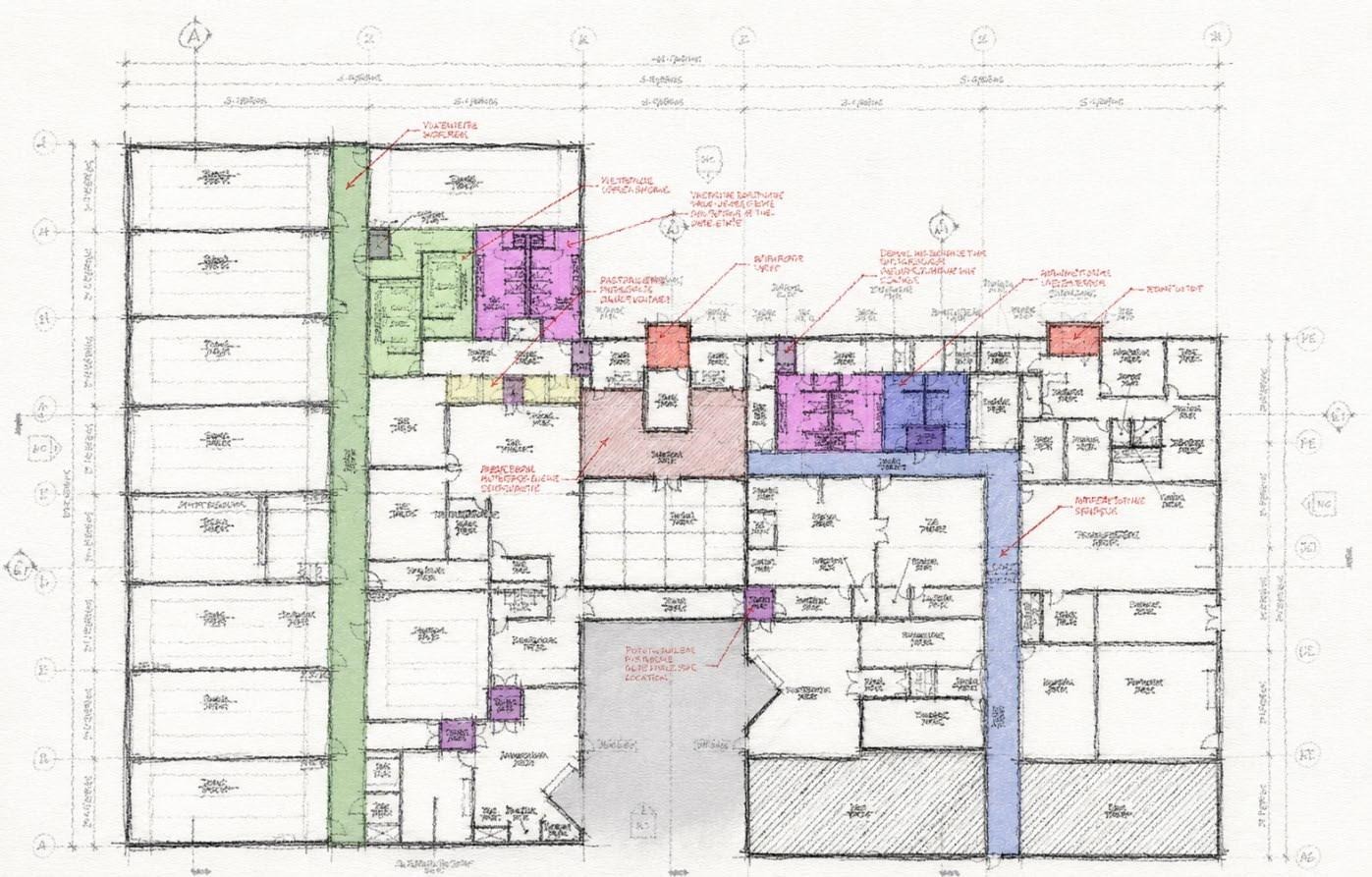
- Facility Layout and Spatial Segregation – room adjacencies, personnel flow, material flow, product flow, waste flow, and contamination control
- Quality and Process Controls – quarantine areas, sampling and testing, process repeatability, environmental monitoring, and data collection and retention
- Hygiene and Sanitation – cleanable finishes, equipment access, cleaning procedures, personnel hygiene, and sanitation workflows
- Mechanical and Environmental Systems – air quality, pressure relationships, odor mitigation, CO₂ monitoring and emergency evacuation, wastewater and condensate handling, and energy code compliance
- Hazardous Materials and Life Safety – chemical storage, volatile extraction protection, hazardous exhaust, fire protection systems, and emergency response considerations
- Site and Infrastructure – zoning, conditional use permits, development agreements, traffic impacts, landscaping requirements, water conservation, and utility capacity
- Growth, Future Operations, and Regulatory Readiness – medical or pharmaceutical manufacturing, cGMP/GACP (current Good Manufacturing Practices / Good Agricultural and Collection Practices) considerations, operational scalability, and future regulatory adaptability
Unlike many regulatory issues that can be addressed through operational procedures, many design-related compliance deficiencies become embedded into the facility itself. Correcting them often requires renovation rather than revised operating procedures. Therefore, how a facility is designed, and the degree to which regulatory compliance is incorporated into the planning process, can have a significant impact on both capital expenditure and long-term operating costs. Anticipating future regulatory changes during early planning may require additional upfront investment, but it can substantially reduce future renovation costs, operational disruptions, and business risk. When properly integrated into the Basis of Design, regulatory compliance becomes more than a licensing requirement, it becomes a tool for improving operational efficiency, reducing lifecycle costs, and minimizing the potential for crop or product loss.
One issue I've observed repeatedly is facilities that do not fully comply with state-adopted cGMP requirements. In many cases, these deficiencies are not identified during the licensing or inspection process and may remain undiscovered until operational problems arise, third-party audits are performed, or owners pursue higher regulatory standards. Although these deficiencies may not immediately affect an operator's ability to maintain a license, they can significantly increase the cost of future renovations, reduce operational efficiency, and limit opportunities for facility expansion or pharmaceutical manufacturing.
Key Takeaway:
Regulatory compliance must be more than simply satisfying the requirements for obtaining a license. It should be viewed as an opportunity to position a facility for long-term operational success. Every compliance requirement ultimately becomes a design decision that influences facility performance, operational flexibility, lifecycle cost, and future business opportunities. Facilities designed only to satisfy today's minimum requirements often require the greatest investment to capitalize on tomorrow's opportunities.
HVAC, air quality, humidity, odor, and environmental controls
Every major system within a cannabis cultivation facility serves a critical purpose. Electrical systems provide power. Water treatment and fertigation deliver nutrients. Security systems protect valuable assets. Yet arguably no single building system has a greater influence on crop health, product consistency, operational efficiency, and overall facility performance than the HVAC system. While it’s easy to focus primarily on the cultivation spaces, temperature, humidity, airflow, pressure relationships, and environmental conditions influence virtually every stage of the cultivation and production process, from propagation through harvest and post-harvest operations.
In most commercial buildings, HVAC exists to support the occupants. In a cultivation facility, the HVAC system exists to support the crop and directly influences crop health, yield, consistency, and ultimately product quality. In a cannabis facility, the crop is the business. When these systems perform as intended, they often go unnoticed. When they don't, the consequences can be immediate, expensive, and difficult to recover from.
Because HVAC directly influences both the biological performance of the crop and the operational performance of the facility, its design extends well beyond equipment selection. Air distribution, humidity management, pressure relationships, redundancy, filtration, controls integration, odor management / mitigation, equipment accessibility, maintenance strategies, and long-term operational flexibility should all be evaluated during development of the Basis of Design. These decisions should also be evaluated based on their influence on both capital expenditure (CapEx) and long-term operating costs (OpEx). Future growth, phased expansion, and evolving operational requirements should likewise be incorporated into the planning process. Decisions made during early planning establish the framework for environmental consistency, energy efficiency, maintainability, scalability, and the facility's ability to adapt to future operational, regulatory, and business requirements.
Every HVAC design decision represents a balance between capital investment, operational performance, energy consumption, maintainability, redundancy, and overall business risk. HVAC is often the single largest capital investment within a cannabis cultivation facility and typically represents one of its largest ongoing operating expenses. I've seen far too many facilities compromised because mechanical systems were evaluated primarily on first cost rather than total life-cycle performance. Reducing initial capital cost may improve the project budget, but it can also increase long-term operating expenses, environmental instability, maintenance requirements, equipment downtime, production variability, yields and product quality, and ultimately the potential for crop loss. The objective is not to identify the least expensive HVAC system, but rather the one that provides the appropriate balance of performance, reliability, operating economics, and risk for the owner's specific operational requirements and business objectives.
Key Takeaway:
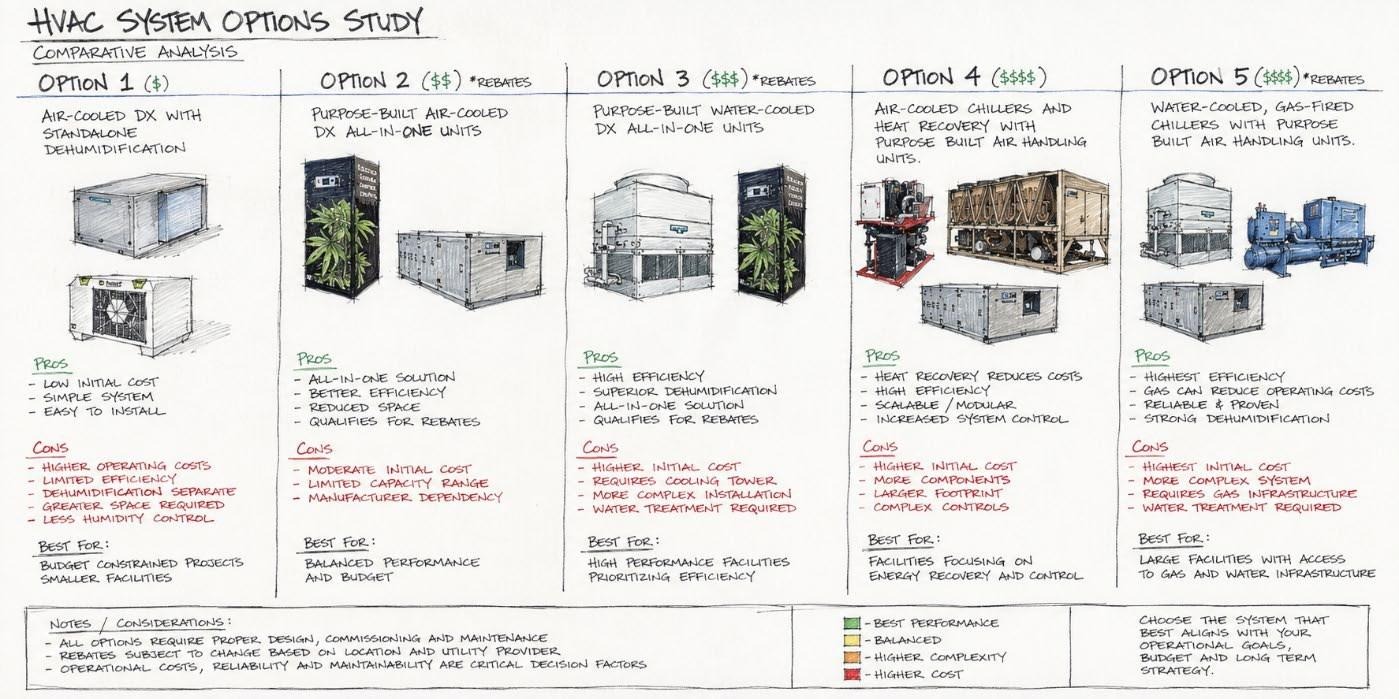
There is a wide range of mechanical and environmental control systems available for integration into a cannabis cultivation facility. Temperature and humidity can be controlled through independent systems or fully integrated solutions. Environmental controls can range from standalone room controllers to sophisticated Building Automation Systems (BAS) capable of monitoring and managing an entire facility. Each approach offers distinct advantages and disadvantages related to capital cost (CapEx), operating cost (OpEx), redundancy, maintainability, scalability, operational flexibility, environmental consistency, and long-term reliability.
Utilizing first cost as the defining criteria for selection of a mechanical system without consequence analysis is a setup for failure. The decision should be driven by the owner's business objectives, production strategy, operational philosophy, staffing capabilities, and long-term growth plans. The most appropriate HVAC solution is not necessarily the most sophisticated or the least expensive, it is the one that best aligns with the facility's intended operation throughout its lifecycle. Ultimately, the objective is not to identify the “best” HVAC system available, rather it’s to identify the system that best supports and aligns with the owner's business objectives, operational strategy, risk tolerance, and long-term vision for the facility.
Workflow and space planning for cultivation, processing, and manufacturing
Few design decisions have a greater influence on cGMP compliance, operational efficiency, product quality, and long-term facility performance than workflow and space planning. The objective is not simply to arrange rooms within a building, but to create an operational environment that supports the owner's production strategy, staffing model, and business objectives. Proper evaluation of space requirements, operational relationships, regulatory requirements, and future growth during development of the Basis of Design establishes the framework upon which efficient workflows are built.
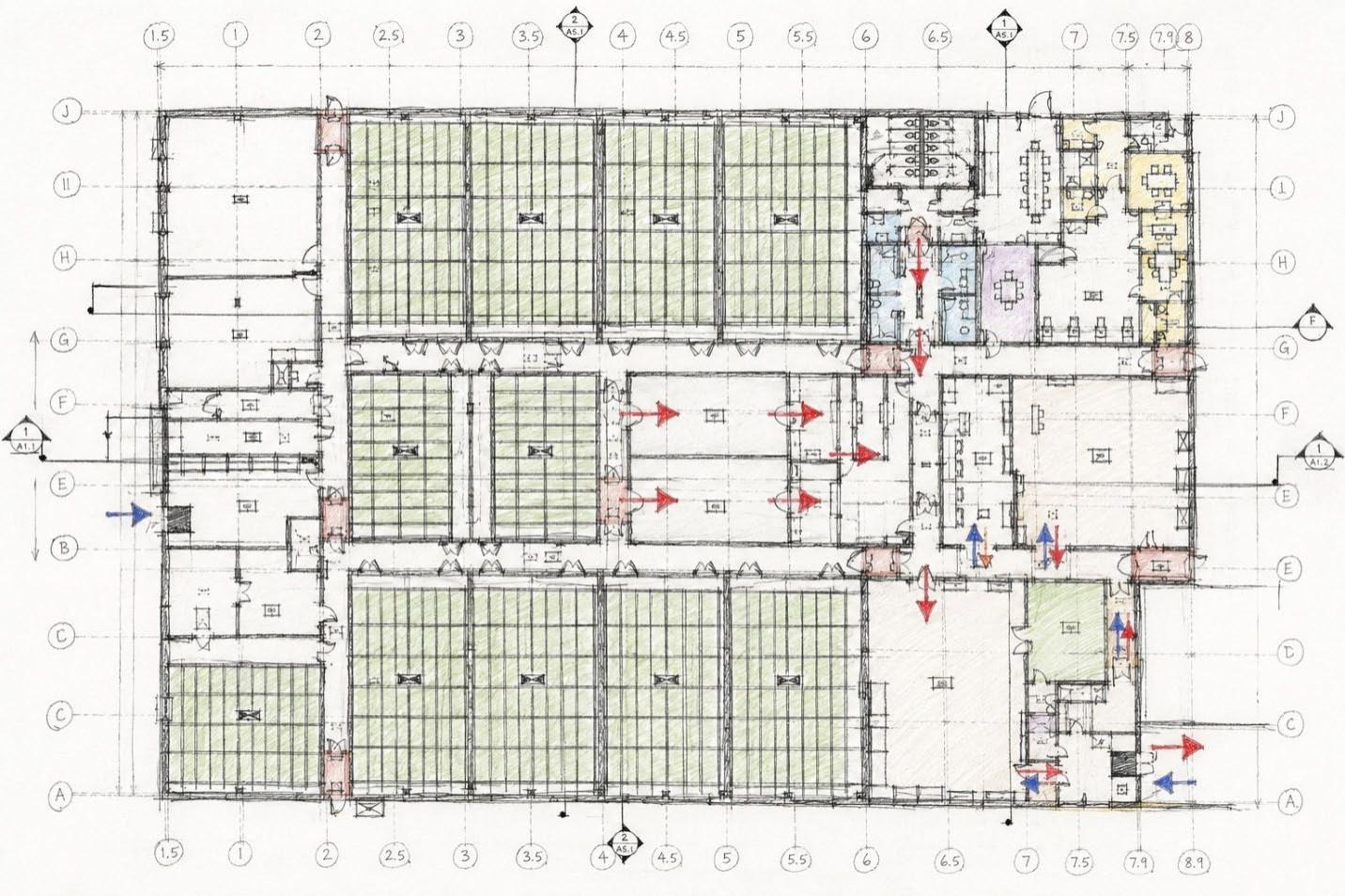
One of the most common mistakes in facility planning is allowing the building to dictate the workflow rather than allowing the workflow to dictate the building. The functional arrangement of cultivation, processing, post-harvest processing, manufacturing, testing, storage, and support spaces should be driven by the movement of people, materials, product, waste, and the information necessary to manage, document, and verify those activities. While this can be especially challenging when adapting an existing building, it is rarely insurmountable when operational objectives are clearly established during the Basis of Design. When these relationships are properly evaluated during early planning, facilities operate more efficiently, reduce unnecessary movement, improve product quality, minimize biosecurity risks, and are better positioned to adapt as operational requirements evolve. These same planning principles also support many regulatory and cGMP objectives by promoting the unidirectional movement of personnel, materials, and product while minimizing opportunities for cross-contamination and workflow conflicts. Every unnecessary step, every material handoff, every workflow intersection, and every operational bottleneck represent wasted time, unnecessary cost, and increased operational risk.
Although product flow often receives the greatest attention, effective workflow planning extends well beyond the movement of product. Facility design should independently evaluate the movement of personnel, materials, products, waste, and production information throughout the facility. Each has unique operational, regulatory, and biosecurity requirements that influence room adjacencies, corridor layouts, equipment placement, and environmental segregation. Failure to properly coordinate these workflows often results in unnecessary travel distances, operational bottlenecks, increased labor costs, contamination risks, and reduced production capacity.
Key Takeaway:
Workflow and space planning should never be viewed as simply architectural exercises. When properly evaluated, designed, and implemented, they become the physical expression of an owner's operational strategy. Creating an efficient floor plan doesn’t necessarily ensure a facility that most effectively supports the movement of people, materials, product, waste, and operational information. When workflow drives the design, rather than the building, facilities become more efficient, more adaptable, and better positioned to support future growth.
Designing for Maintainability and Facility Management
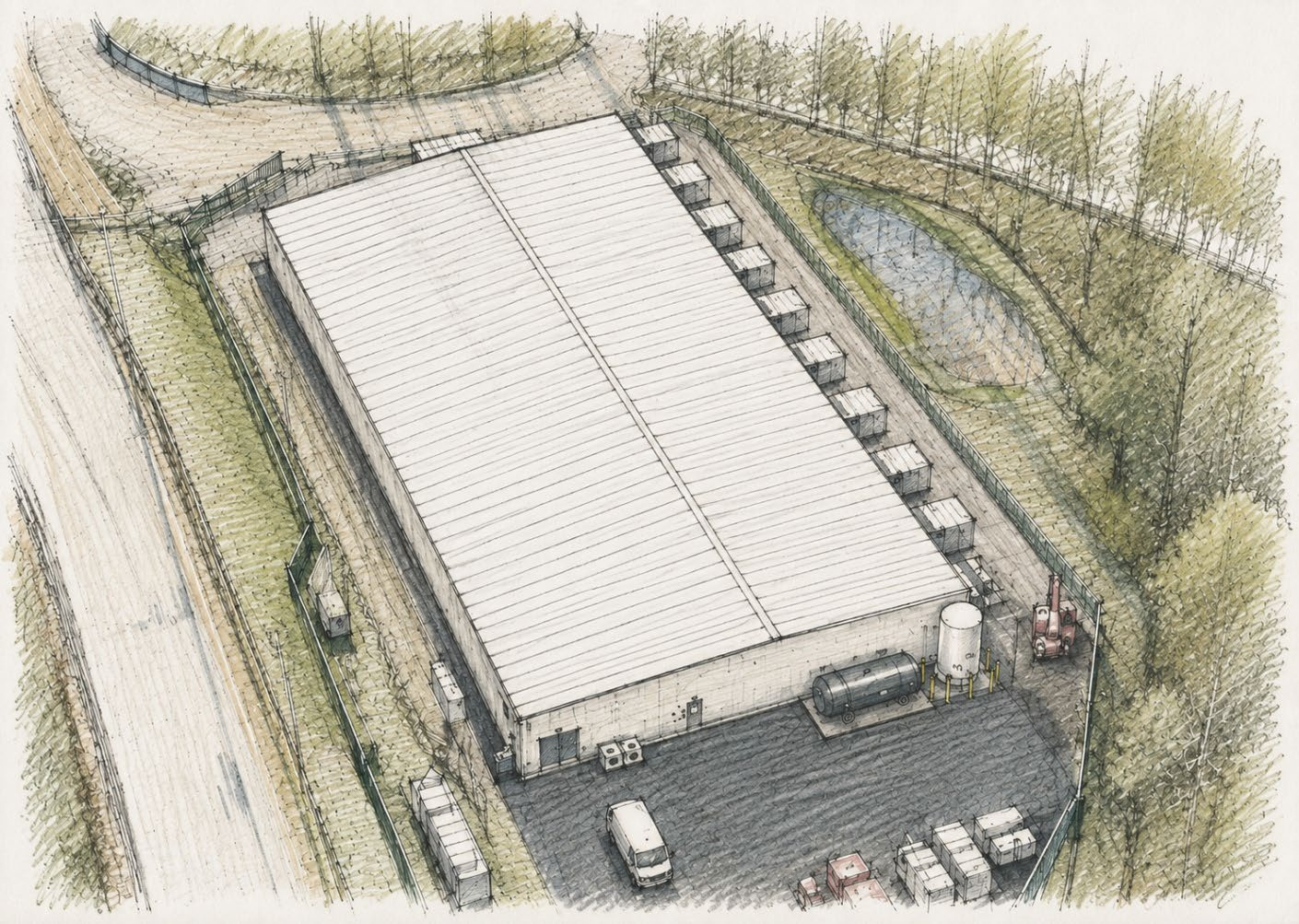
One of the most overlooked aspects of facility planning is maintainability. Owners often focus on selecting the most advanced equipment or the lowest-cost systems while giving far less consideration to how those systems will be operated, maintained, repaired, and eventually replaced over the life of the facility.
Throughout my career I’ve used the following phrases repeatedly,
- The most advanced technology in the world provides little value if the people responsible for operating it don't understand how to use it. Another way to say this, a little more philosophical, technology should never exceed an organization's ability to operate and maintain it.
- Equipment that is easy to access is far more likely to receive routine maintenance than equipment that is difficult to reach.
Designing for maintainability begins long before equipment is installed. It begins during development of the Basis of Design, when equipment selection, maintenance access, staffing capabilities, vendor support, replacement strategies, and lifecycle costs are evaluated alongside the owner's operational objectives. These decisions influence whether maintenance can be performed by in-house personnel or requires specialized contractors, and whether the associated operating costs align with the project's long-term business plan and financial model.
Every maintenance decision is ultimately a design decision. Consider the implications of installing an air handling unit without adequate service clearance, locating critical equipment above inaccessible ceilings, or designing mechanical spaces that do not allow maintenance personnel to safely transport filters, tools, and replacement components. These are not maintenance problems, they are planning decisions that become operational realities. Similarly, if an in-room dehumidifier is installed without adequate access to coils, filters, drain pans, or the service clearances necessary to inspect, clean, and maintain the equipment, how will the unit be properly maintained? What SOP could reasonably be developed to satisfy cGMP expectations? More importantly, what impact will that SOP solution have on labor requirements, production schedules, operating costs, and long-term profitability?
The cost of purchasing equipment is incurred once. The cost of operating and maintaining that equipment continues throughout the life of the facility. Designing for maintainability establishes the physical capability to efficiently service a facility. Facility management establishes the operational framework that ensures those capabilities are consistently realized throughout the life of the facility. Designing for maintainability is only the first step. Long-term success ultimately depends on the owner's ability to effectively manage the facility throughout its operational life. Facility management extends well beyond preventive maintenance. It encompasses asset management, maintenance planning, staffing, training, vendor relationships, spare parts inventories, documentation, budgeting, and continuous performance monitoring. Each of these components should be evaluated during development of the Basis of Design to ensure the facility can be operated, maintained, and managed in full alignment with the owner's operational objectives, business plan, and pro forma.
Key Takeaway:
Maintainability and facility management cannot be approached as operational activities that begin after the construction has been completed. They, like other major components, are strategic planning considerations that begin during development of the Basis of Design. Every decision regarding equipment selection, accessibility, staffing, maintenance, and facility management ultimately becomes a business decision affecting operating costs, production reliability, regulatory compliance, and long-term profitability. Therefore, properly evaluating and planning for maintainability and facility management early in design will help ensure a facility that can be successfully owned, operated, maintained, and managed throughout its lifecycle in alignment with the owner's operational objectives, business plan, and pro forma.
Energy efficiency and long-term operating costs
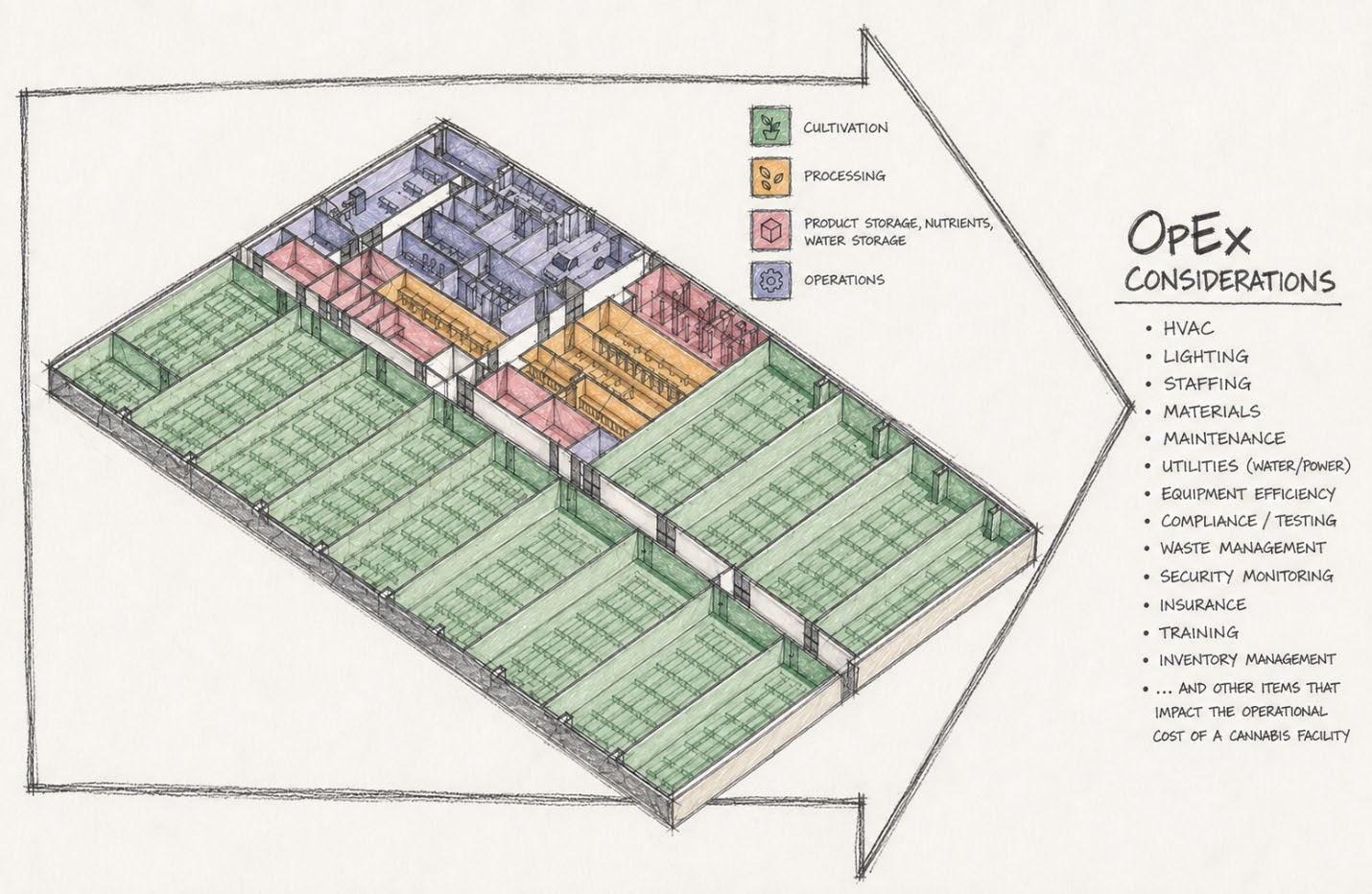
As the cannabis industry has matured, operators have experienced increasing margin compression driven by declining wholesale prices, increased competition, and rising operating costs. This changing business environment has elevated the importance of energy efficiency. What was once viewed primarily as an opportunity to reduce utility costs has become a strategic component of long-term financial performance.
Compliance with applicable energy codes is nothing more than meeting a minimum regulatory standard. It does not necessarily optimize long-term operating costs, facility operations, or alignment with an owner's business plan and pro forma. Those evaluations should occur during development of the Basis of Design, where lifecycle costs, operational objectives, and return on investment (ROI) can be assessed alongside code compliance. Many of the most significant opportunities to improve energy efficiency are determined long before a facility becomes operational through decisions regarding building orientation, envelope performance, HVAC system selection, lighting, environmental controls, process integration, and operational strategy.
The evaluation of energy efficiency should extend well beyond the mechanical and electrical systems. Decisions regarding building orientation, insulation values, glazing, air infiltration, lighting technologies, environmental control strategies, equipment redundancy, and operational scheduling all influence long-term energy consumption. Individually these decisions may appear incremental; collectively they establish the operating economics of the facility throughout its lifecycle.
Operational scheduling provides a good example. A cultivation facility utilizing a flip schedule may benefit from improved utilization of equipment and production capacity while also distributing electrical demand over a longer period. However, that same strategy can create a continuous 24-hour electrical load, limiting the operator's ability to shift energy consumption away from peak utility demand periods. As electrical infrastructure continues to evolve and increasing demand from large industrial users, including data centers, influences utility planning and energy costs in many regions, these operational decisions should be evaluated alongside the owner's business plan, pro forma, and long-term energy strategy rather than viewed solely from a production perspective.
Another consideration during development of the Basis of Design is the evaluation of available incentive programs. Rebates offered by utility providers and governmental agencies can alter the financial equation associated with higher-efficiency equipment, controls, and building systems. Solutions that initially appear cost-prohibitive may become financially advantageous once available incentives are incorporated into the lifecycle analysis. Evaluating these opportunities early helps ensure that decisions are based on true lifecycle costs rather than initial construction costs alone.
Key Takeaway:
Properly addressing energy efficiency is a strategic business decision that directly influences operating costs, production economics, and long-term profitability. As with other sections within this article, implementing a consequence analysis during development of the Basis of Design ensures a vision aligned solution.
Security, access control, and protection of high-value assets
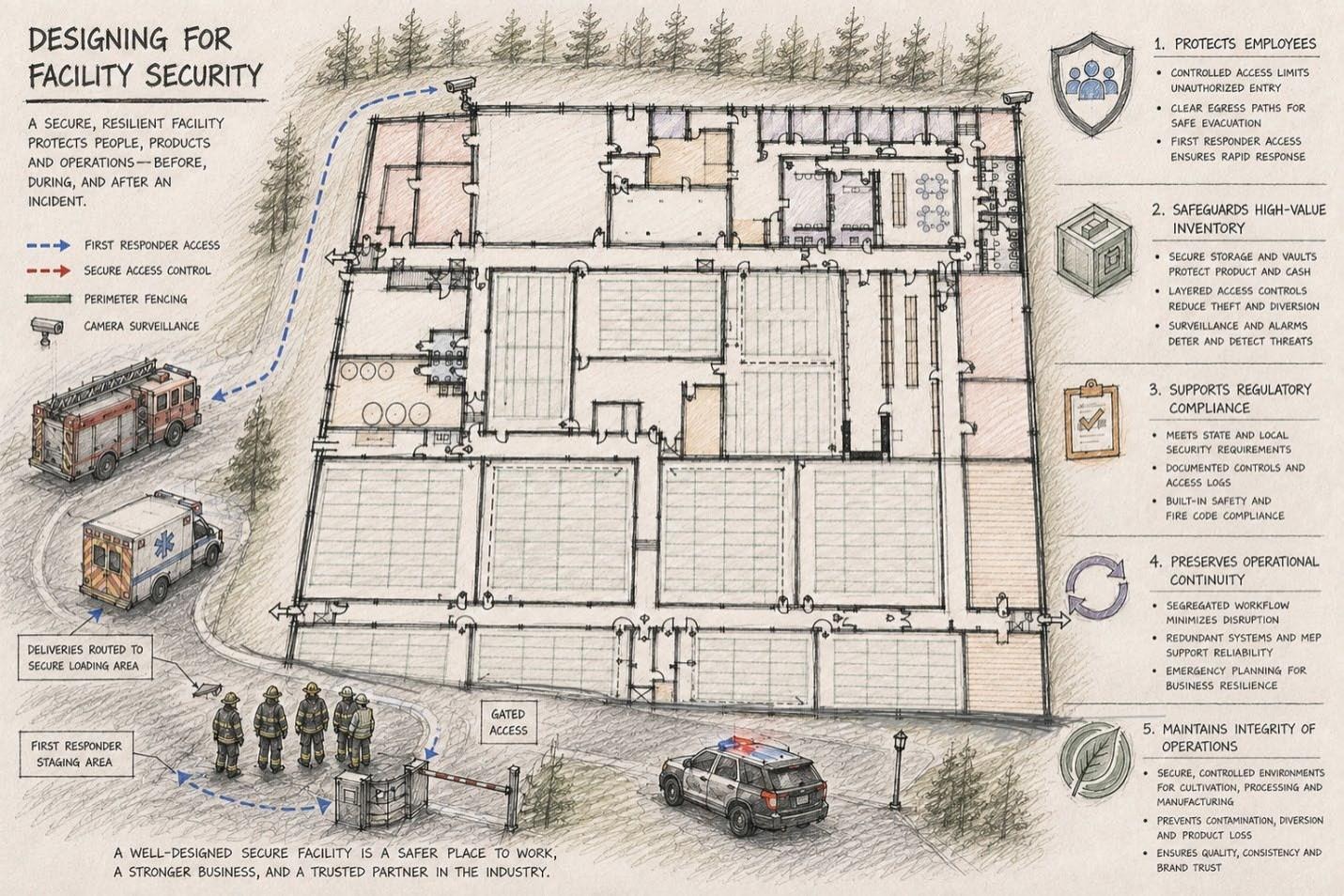
Security within a cannabis facility goes far beyond addressing theft or unauthorized access. It protects employees, safeguards high-value inventory, supports regulatory compliance, preserves operational continuity, and maintains the integrity of cultivation, processing, and manufacturing operations. While state regulations establish minimum security requirements for licensure, the Basis of Design provides the opportunity to develop a security strategy that aligns with the owner's operational objectives, risk tolerance, and long-term business plan.
Like every other critical facility planning decision, security should be evaluated in the context of the owner's operational objectives, staffing model, production strategy, risk tolerance, and long-term business plan. Decisions regarding access control, surveillance technologies, perimeter protection, credential management, visitor access, and operational procedures directly influence not only regulatory compliance but also operational efficiency, employee safety, and business continuity.
Security influences nearly every aspect of facility planning and operations. It affects workflow by controlling the movement of personnel, materials, products, and waste throughout the facility. It supports biosecurity through controlled access and spatial segregation while reinforcing regulatory compliance, operational efficiency, employee safety, and business continuity. Unlike many building systems that function independently, an effective security program is layered, integrating physical design, operational procedures, electronic systems, cybersecurity, and personnel policies into a unified strategy.
An improperly implemented security strategy can have consequences far beyond the loss of product. It can interrupt operations, compromise product integrity, delay production, affect regulatory compliance, and expose the owner to significant financial, operational, and reputational risk. As with every other major planning decision discussed throughout this article, security should never be evaluated in isolation. The objective is not simply to satisfy minimum regulatory requirements, but to develop a security strategy that supports the owner's operational objectives while remaining fully aligned with the business plan, pro forma, and long-term vision for the facility.
Key Takeaway:
Security isn’t just an exercise of meeting regulatory requirements through a collection of cameras and access control devices. It is an integrated operational strategy that influences regulatory compliance, workflow, employee safety, business continuity, and protection of high-value assets. The most effective security solution is not necessarily the one with the greatest amount of technology, it is the solution that best aligns with the owner's operational objectives, risk tolerance, staffing model, and business plan.
Summary
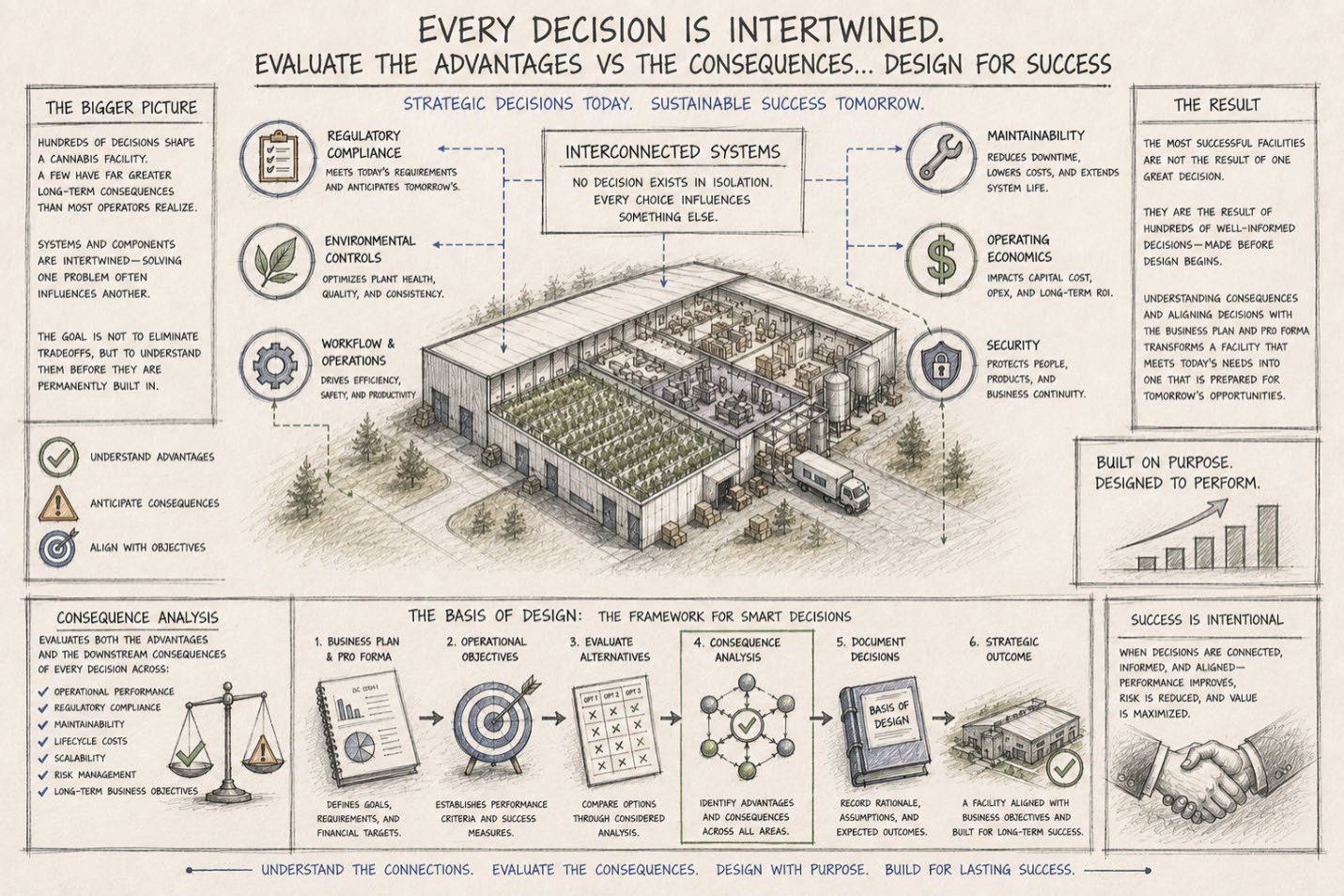
When developing a cannabis cultivation, processing, manufacturing, and/or vertically integrated facility, hundreds of decisions will go into shaping the project. While every decision has value, a handful carries far greater long-term consequences than most operators realize. It’s also important to recognize that systems and components within a facility are intertwined. Therefore, while every planning decision solves one problem, it also influences another. The objective is not simply to make decisions. Rather, it is to understand the advantages and consequences those decisions will have on every other aspect of the facility.
Throughout this article, we've explored decisions related to regulatory compliance, environmental controls, workflow, maintainability, operating economics, and security. While each topic appears independent, they all share one common characteristic: few design decisions improve one aspect of facility performance without affecting another. Like the operation of a cannabis facility itself, each of these components is interconnected, with changes to one often influencing the performance of another. The objective is not to eliminate those tradeoffs, but to understand them before they become permanently built into the facility.
Recognizing the interconnected nature of facility decisions is the foundation of Consequence Analysis. Rather than evaluating decisions independently, Consequence Analysis evaluates both the advantages a decision creates and the downstream consequences that decision may have on every other aspect of the facility. It challenges owners and project teams to evaluate operational performance, regulatory compliance, maintainability, lifecycle costs, scalability, risk, and long-term business objectives before decisions become embedded within the design. The Basis of Design provides the framework within which these evaluations occur. Guided by the owner's business plan and pro forma, it establishes the operational objectives, evaluates alternatives, and documents the decisions that ultimately shape the facility. When combined with Consequence Analysis, the Basis of Design becomes far more than a planning document, it becomes a strategic decision-making process that aligns facility design with long-term business success.
The most successful cannabis facilities are rarely the result of a single great design decision. They are the result of hundreds of well-informed decisions made before design begins. Understanding both the advantages and the consequences of those decisions, and intentionally aligning them with the owner's operational objectives, business plan, and pro forma, is what transforms a facility from one that simply meets today's needs into one that is prepared for tomorrow's opportunities.
Frequently Asked Questions
What is the most important decision when designing a cannabis facility?
Success begins long before construction starts. Developing a comprehensive Basis of Design that aligns the owner's business plan, operational goals, regulatory requirements, and long-term vision provides the foundation for every major design decision.
Why should cannabis facilities be designed for future expansion?
Successful cannabis businesses rarely remain the same size throughout their lifecycle. Planning for future expansion helps operators avoid costly renovations, operational disruptions, and infrastructure limitations as production grows.
How does facility design affect regulatory compliance?
Regulatory compliance extends beyond obtaining a license. Decisions about facility layout, environmental systems, security, workflow, and infrastructure all influence long-term compliance, operational flexibility, and future business opportunities.
Why is HVAC considered one of the most important systems in a cannabis facility?
HVAC systems directly influence crop health, environmental consistency, product quality, energy efficiency, operating costs, and long-term reliability. Selecting the right system should be based on business objectives rather than simply choosing the lowest-cost option.
Why is workflow planning so important in cannabis facility design?
Efficient workflow improves operational efficiency, product quality, regulatory compliance, and biosecurity. Workflow should drive building design rather than allowing the building to dictate workflow.
How can facility design reduce long-term operating costs?
Early planning decisions affect maintenance requirements, energy efficiency, equipment accessibility, staffing, and lifecycle costs. Designing with long-term operations in mind helps reduce future expenses while improving reliability and profitability.
How should cannabis operators approach facility security?
Security should be viewed as an integrated operational strategy rather than simply installing cameras or meeting minimum licensing requirements. Effective security protects employees, inventory, regulatory compliance, and business continuity while supporting overall operations.
Relevant CLAB Resources
- Cannabis Banking & Finance
- How to Write a Cannabis Business Plan
- Cannabis HR: How to Build a Compliant, High-Performing Workforce
- How to Start a Cannabis Business in Florida
- One of the Biggest Mistakes Cannabis Companies Make: Building Too Big, Too Soon
- Florida's New MMTC Authorization Rule Is Live: Is Your Facility Ready?
- Cannabis Regulatory Compliance: How Operators Should Work With Regulators
Planning a Cannabis Facility?
Connect with Sam Andras and the team at 3rd Act Architecture & Consulting to learn how strategic facility planning can reduce risk, improve efficiency, and support long-term operational success.